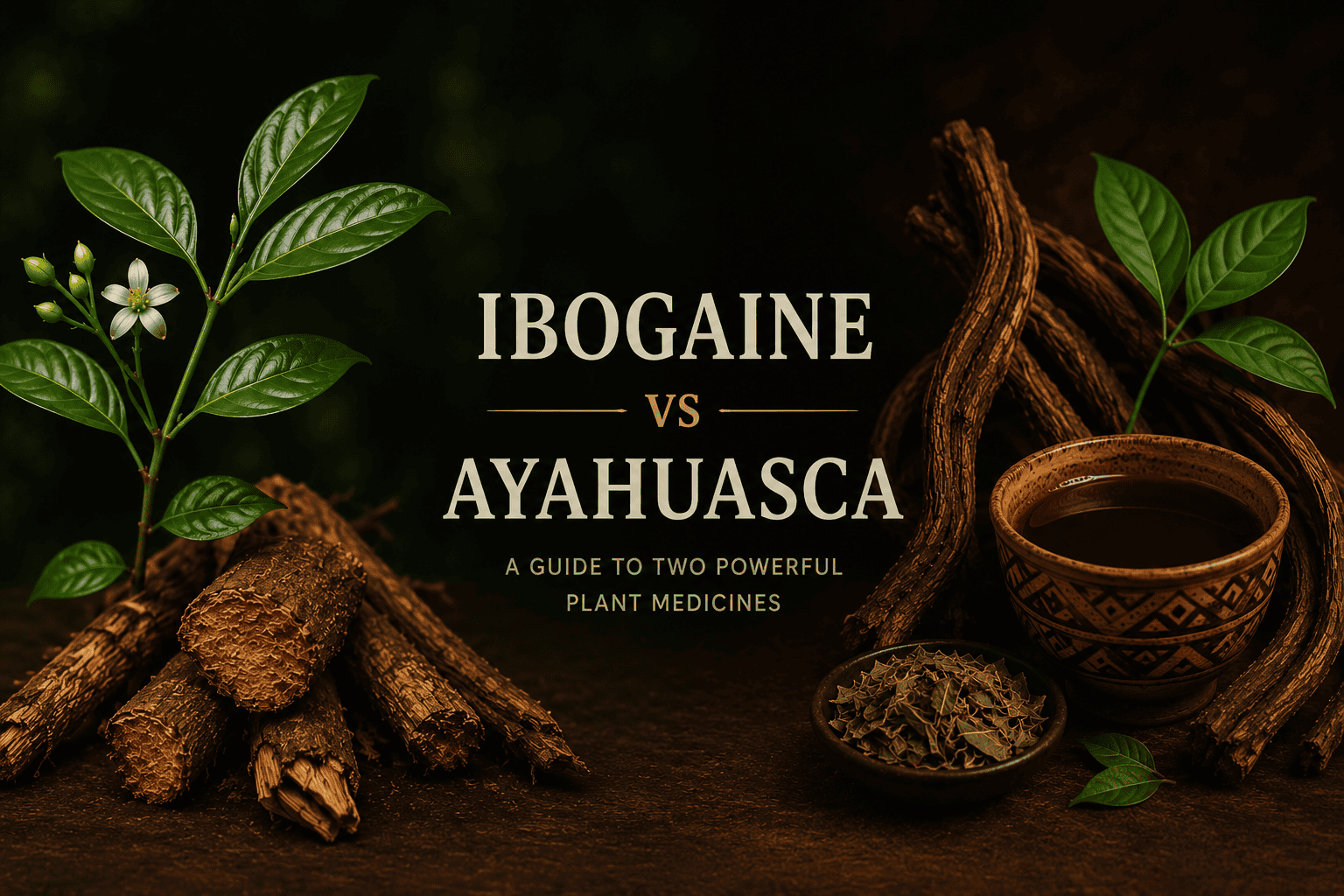
As interest in plant medicine continues to grow, two names often come up in conversation:
Ibogaine and Ayahuasca
Both are powerful.
Both have deep roots in indigenous traditions.
Both can lead to profound transformation.
But they are very different in how they work, how they feel, and who they are suited for.
Understanding these differences is essential before considering either path.
Origins and Traditional Use
Ayahuasca
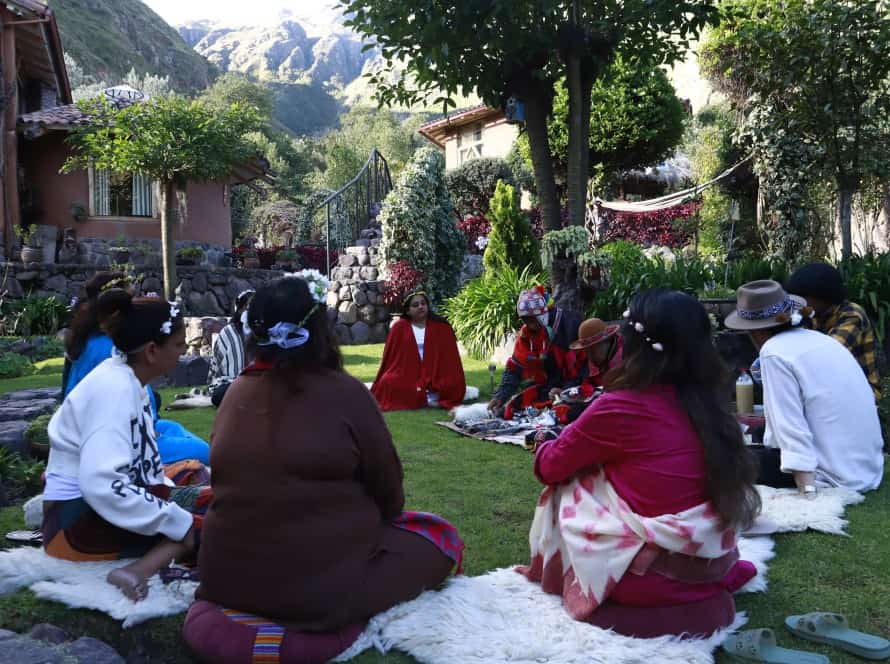
Ayahuasca comes from the Amazon basin and has been used for centuries by indigenous tribes in South America.
It is traditionally consumed in ceremonial settings, guided by a shaman or facilitator, for:
- Healing
- Spiritual insight
- Connection
It is deeply woven into community, ritual, and song.
Ibogaine
Ibogaine is derived from the root bark of the Tabernanthe iboga plant, native to Central West Africa.
It is used within the Bwiti tradition, often in initiation ceremonies and spiritual practices.
In modern contexts, it is also known for its association with addiction interruption and deep psychological insight.
Nature of the Experience
Ayahuasca: Emotional, Visionary, Fluid
Ayahuasca journeys are often described as:
- Visionary
- Emotional
- Symbolic
People may experience:
- Vivid imagery
- Deep emotional release
- A sense of connection to nature, self, or something greater
The experience can feel like a dialogue, sometimes gentle, sometimes intense, but often flowing.
Ibogaine: Direct, Analytical, Confronting
Ibogaine tends to be:
- Structured
- Linear
- Deeply introspective
It is often described as:
- A life review
- A clear replay of memories
- A direct confrontation with patterns
Rather than symbolic visions, it can feel like being shown your life with clarity and precision.
Less emotional… More factual.
Duration of the Journey
Ayahuasca: Typically, 4–8 hours (overnight ceremony)
Ibogaine: 12–24+ hours (sometimes longer, with after-effects)
Ibogaine is significantly longer and often more physically demanding.
Physical Experience
Ayahuasca
- Purging (vomiting, emotional release) is common
- Movement is usually possible
- Participants may sit, lie down, or shift during the journey
Ibogaine
- Strong physical stillness (movement can feel difficult)
- Nausea may occur, but purging is not the central focus
- Often requires lying down for extended periods
Emotional Tone
Ayahuasca: Can be heart-opening, emotional, and relational
Ibogaine: Can feel neutral, observational, and confronting
Ayahuasca may feel like being held through the process.
Ibogaine may feel like being shown the truth without a filter.
Use in Healing
Ayahuasca
Commonly approached for:
- Emotional healing
- Trauma processing
- Spiritual growth
- Connection and meaning
Ibogaine
- Often explored for:
- Addiction interruption
- Behavioral pattern recognition
- Deep psychological insight
It is particularly known for creating a “reset window,” though integration remains essential.
Safety Considerations
This is one of the most important differences.
Ayahuasca
- Requires screening (especially for medications and mental health)
- Generally safe in proper ceremonial settings with experienced facilitators
Ibogaine
- Carries significant medical risks, especially related to the heart
- Requires medical supervision, ECG screening, and monitoring
- Should never be taken in unregulated or casual settings
Ibogaine demands a much higher level of medical oversight.
Integration and Aftercare
Both medicines require integration, but the nature differs slightly.
Ayahuasca: Integration often focuses on emotional processing and lifestyle alignment
Ibogaine: Integration is critical for maintaining changes, especially in addiction recovery
In both cases, the ceremony is only the beginning.
Which One Is “Better”?
Neither.
They are simply different.
Ayahuasca is often more heart-centered and relational
Ibogaine is often more direct and confrontational
The question is not which is better,
but which (if any) is appropriate for where you are.
Final Reflection
Both Ibogaine and Ayahuasca are powerful teachers.
But they speak different languages.
One may guide you through emotion and connection.
The other may show you your life with uncompromising clarity.
Both require respect.
Both require preparation.
Both require integration.
And most importantly, both require honest self-inquiry before stepping in.