A One-Glance Truth, and the Deeper Story Beneath It
As interest in plant medicine grows worldwide, one question arises again and again:
Is this legal?
The answer is not simple.
It depends on where you are, what medicine, and how it is held.
Across the world, the same substances are viewed through radically different lenses, as drugs, as medicines, or as sacred cultural inheritance. Understanding this landscape is essential for anyone walking this path with responsibility.
The Big Picture (One-Glance Truth)
But behind this simple table lies a much deeper philosophical divide.
United States: Medicine Through the Lens of Science & Policy
Federal Law (The Dominant Authority)
Under U.S. federal law:
• Ketamine →Legal (prescription only, medical use)
• LSD, psilocybin, MDMA, DMT, 5-MeO-DMT → Illegal (Schedule I substances)
Schedule I classification means these substances are officially considered to have:
• No accepted medical use
• High potential for abuse
This classification still stands, even as research tells a more nuanced story.
State & Local Reality
At the state and city level, the picture becomes more complex:
• Several states and cities have decriminalized certain psychedelics
• Decriminalization means lower law-enforcement priority, not legalization
• Federal law still overrides state law in theory
Notable Exceptions
• Oregon
• Regulated psilocybin services
• Not recreational, not retail
• Structured, facilitator-led sessions only
• Colorado
• Regulated access to certain natural psychedelics
• Cities like Denver, Oakland, Seattle
• Decriminalization policies in place
The Tone of the United States
Highly medicalized. Legally cautious. Research-driven.
“Allowed only if science and policy say so.”
The U.S. tends to ask:
Can this be proven, standardized, and controlled?
Europe: Conservative Laws, Pragmatic Reality
The General Rule
Across most of Europe:
• Psychedelics are illegal
• Ketamine is legal for medical use in many countries
But Europe operates with far more nuance than the law books suggest.
The Grey Zones
Europe often shows:
• Lower penalties
• Less punitive enforcement
• Strong clinical research environments
• Cultural tolerance without formal legalization
Country Snapshots
Netherlands
• Psilocybin mushrooms → illegal
• Psilocybin truffles → legal (technical loophole)
Portugal
• All drugs decriminalized
• Possession treated as a health issue
• Still illegal to sell or commercially distribute
Switzerland
• LSD and psilocybin allowed in approved therapy and research contexts
United Kingdom
• Some of the strictest laws
• Yet paradoxically one of the strongest psychedelic research hubs
The Tone of Europe
Legally conservative. Practically pragmatic.
“Illegal, but we won’t destroy your life for it.”
Europe tends to ask:
How do we reduce harm while continuing research?
South America: Medicine as Ancestral Inheritance
This is where the worldview changes completely.
The Core Difference
In many South American countries, certain plant medicines are:
• Protected as traditional medicine
• Embedded in indigenous and spiritual practice
• Legally tolerated or explicitly allowed
These medicines are not seen as substances; they are seen as living cultural knowledge.
Country Highlights
Peru
• Ayahuasca is legal and protected
• Recognized as cultural heritage
Brazil
• Ayahuasca legal in ceremonial and religious contexts
Colombia
• Strong indigenous protections
• Traditional medicine widely respected
Bolivia
• Plant medicines accepted as part of cultural life
An Important Distinction
• Synthetic psychedelics (LSD, MDMA) → Illegal
• Plant-based ceremonial medicines → Legal or tolerated
The law here recognizes lineage, ceremony, and tradition.
The Tone of South America
Ancestral. Spiritual. Embodied.
“This medicine belongs to the land and the people.”
South America tends to ask:
How do we protect what has always existed?
What This Tells Us
The legal differences are not only about safety or risk.
They reveal deeper questions:
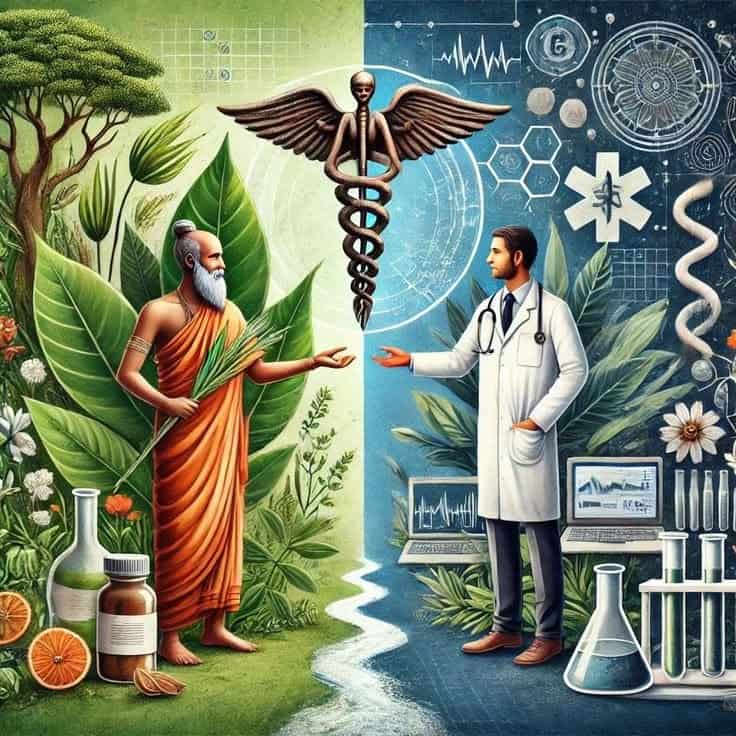
• Is healing a medical procedure or a cultural rite?
• Who has the authority to decide?
• Can ancient wisdom coexist with modern systems?
Plant medicine sits at the crossroads of:
• Law and lineage
• Science and spirit
• Control and trust
Understanding this landscape helps us approach the work with humility, respect, and responsibility.
A Closing Reflection
No matter the country, one truth remains:
The law may shape access, but integrity shapes the journey.
Plant medicine asks us not just where it is legal, but how it is held, honored, and integrated into life.